
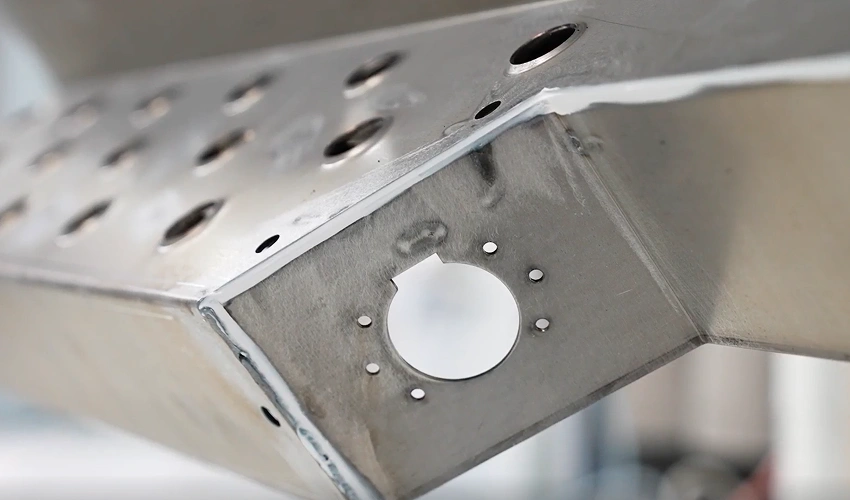
A service truck body takes a beating over its lifetime. Rain, snow, road salt, mud, jobsite debris, and everyday wear puts its materials and finish to the test. That’s why construction material should be one of your chief considerations when purchasing a new service body.
STAHL was the first in the industry to use corrosion-resistant galvanneal steel for service body construction. Today, galvanneal steel is widely used throughout the work truck industry, but what makes it such a good fit for service bodies?
The answer comes down to how galvanneal steel is made and how its properties help it withstand the demands of daily use. Learn what sets galvanneal steel apart so you can make a more informed decision when comparing service truck body materials.
What is Galvanneal Steel?
Galvanneal steel starts as a steel sheet that receives a zinc coating through a hot-dip process. After the zinc is applied, the material goes through an additional heating step, known as annealing. This causes the zinc coating to react with iron from the steel, creating a zinc-iron alloy coating on the surface.
That extra step separates galvanneal from conventional galvanized steel. Both use zinc-based coatings to help protect the underlying steel from corrosion, but their surface characteristics differ. Galvanneal typically has a matte finish and is especially well suited for applications that will be painted. That’s what makes is particularly well suited to service truck bodies.
Corrosion Resistance Starts Beneath the Paint
Rust is more than a cosmetic concern on a service truck body. Once corrosion take hold, it can affect the body’s apperance and contribute to deterioriation over time. Corrosion poses a greater risk for service truck bodies because they typically spend most of their life outside, exposed to moisture, road salt, and other corrosive elements.
Paint alone is not always enough to protect bare steel throughout years of hard use, as scratches, chips, and everyday wear can compromise the finish. Zinc provides an added layer of corrosion protection, helping shield the underlying steel even when the finish is scratched or damaged.
By protecting the underlying steel from corrosion, galvanneal can promote longevity and reduce corrosion-related maintenance and downtime.
Better Paint Adhesion
Corrosion resistance is only part of the reason galvanneal works well for service bodies.
The zinc-iron alloy created during galvannealing procedures a matte surface that accepts paint well. Galvannealed steel is often used for exposed automotive applications in part because its surface supports a high-quality paint finish.
Why does that matter on a service truck?
The finish serves both functional and aesthetic purposes. A properly applied coating system provides another protective barrier against the environment while giving the truck body a clean, finished appearance. For commercial dealerships, fleets, and service businesses, maintaining that appearance can also help protect the professional image associated with the vehicle.
A quality finish still depends on proper surface preparation and coating application, but choosing a steel substrate that works well with the coating system helps create a stronger foundation for long-term performance.
Galvanneal Steel vs. Other Service Truck Body Materials
Galvanneal is not the only material used in service truck bodies. Here’s how galvanneal steel compares to other options:
Bare or untreated steel
Untreated steel offers strength, but without a protective metallic coating, it relies more heavily on the applied finish to guard against corrosion
Conventional galvanized steel
Galvanized steel also uses zinc to protect the underlying steel and can provide strong corrosion resistance. However, galvanneal’s additional heat treatment creates a zinc-iron alloy surface with characteristics that make is particularly suitable for painted applications.
Aluminum
Naturally resistance to red rust, aluminum also offers weight advantages, but it has different strength, repair, fabrication, and cost considerations other than steel.
Fiberglass
Fiberglass is another lightweight option, but it can be more difficult to repair when damaged. Rather than denting like metal, fiberglass can crack or fracture under impact, an important consideration in demanding work environments.
The right choice depends on the application and the buyer’s priorities
Consider Total Cost of Ownership
Other materials may cost less than galvanneal steel upfront but can corrode sooner, require more frequent refinishing, or deteriorate prematurely. Those costs can add up over the lifetime of the truck.
A durable, rust-resistant service body can help reduce those risks. Maintaining the body’s condition can also make it easier for fleets to keep equipment in service for its intended lifecycle, rather than forcing premature replacement because the body deteriorated sooner than expected.
For organizations purchasing multiple service trucks, even small differences in maintenance requirements can become significant across a fleet. Standardizing a fleet around durable, low-maintenance equipment can help control those costs and improve total cost of ownership overtime.
Built for the Demands Service Trucks Face
Galvanneal steel is a practical choice anywhere service trucks encounter regular environment exposure and heavy use.
That can include construction sites, utility work, municipal operations, infrastructure projects and other applications where trucks spend much of their working lives outside. For example, STAHL serves customers in mining, oil and gas, roofing and asphalt, and more.
For these applications, a truck body needs to do more than look good when it is new. It needs materials and construction methods selected with years of work in mind.
That’s also why material should be considered alongside factors such as body design, compartment configuration, construction methods, finish quality, manufacturer support and parts availability. A serve body is a complete system, and its long-term performance depends on how those elements work together.
Look Beyond the Surface When Choosing a Service Body
When evaluating service bodies, ask manufacturers what materials they use and why. Understanding what’s underneath the paint an tell you a lot about how a truck body is designed to perform years after it leaves the lot.
STAHL builds utility truck bodies with durability, corrosion resistance and longevity in mind. As the first in the industry to use corrosion-resistant galvanneal steel, STAHL set a standard for long-term durability and corrosion protection in service truck bodies.
Ready to find the right service body for your application? Find a STAHL distributor near you.