
A service body is not just another piece of equipment. It is a long-term asset that supports daily operations, protects valuable tools, and keeps crews productive. Like any asset, it requires consistent care to perform at its best.
Without regular service body maintenance, small issues can quickly turn into costly repairs, unplanned downtime, and shortened equipment life. The good news is that a proactive approach to utility truck maintenance can significantly extend lifespan and reduce downtime across your fleet.
Why Service Body Maintenance Matters
Preventive service body maintenance helps fleet managers, upfitters, and service professionals control costs, extend service life, and protect resale value. Small, routine actions such as tightening hardware or addressing early corrosion can prevent larger failures that require expensive repairs or full component replacement.
Perhaps most importantly, consistent upkeep supports uptime, a top priority for successful fleet operations. When trucks stay on the road and out of the shop, crews remain productive, schedules stay on track, and customer commitments are met.
Even the most well-built service truck body requires proper care to reach its full lifespan potential. A proactive approach helps preserve strength, reliability, and performance over time, rather than allowing avoidable wear and neglect to diminish them.
Start With Routine Service Body Inspections
Routine inspections are the foundation of effective utility truck maintenance. They help catch issues early, before they escalate into costly repairs and downtime.
Build a simple cadence into your operation that includes quick weekly visual checks, more detailed monthly inspections, and immediate attention to any issues as they appear. This structure keeps maintenance consistent without overcomplicating the process.
Your regular inspections should focus on:
- Rust or corrosion forming on panels, seams, and underbody areas
- Dents, cracks, or structural damage from jobsite wear
- Loose bolts, fasteners, or mounting hardware
- High-use areas that show early signs of wear
Maintain Service Body Hinges and Latches
Hinges and latches are in constant use, making them among the most common failure points if neglected.
To avoid those consequences, keep to a regular maintenance schedule that includes:
- Lubricate hinges regularly to prevent stiffness and wear
- Check and tighten hardware to keep doors properly aligned
- Test latches to ensure secure closure and locking
- Replace worn components as soon as wear is identified during inspections
Well-maintained doors protect tools, improve safety, and prevent disruptions on the job.
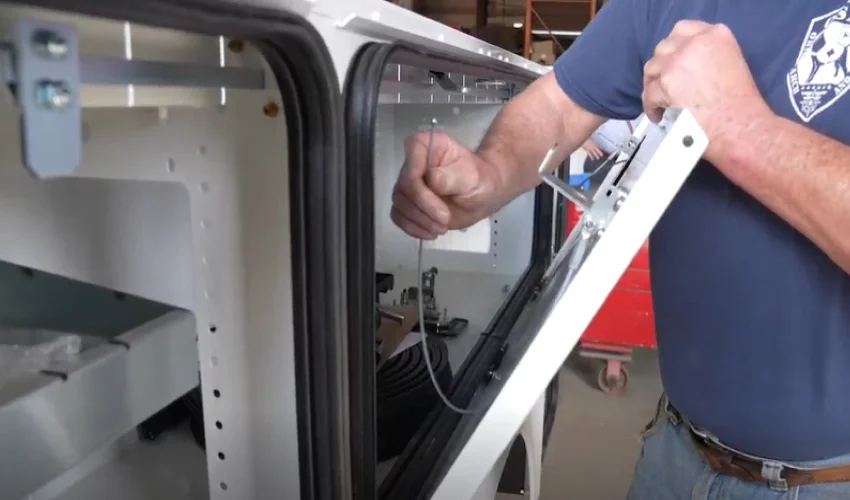
Protect Seals and Prevent Water Intrusion
Water intrusion can damage tools, compromise stored materials, and accelerate internal corrosion.
Keeping compartments sealed and secure helps avoid water damage to the body and its contents. Perform these maintenance tasks to prevent water intrusion:
- Inspect weather stripping and door seals for cracks or gaps
- Clean seals to remove dirt and debris that affect performance
- Replace damaged seals as soon as issues appear
Stay Ahead of Corrosion
Corrosion is one of the biggest threats to service body longevity, especially in harsh environments. Preventing water intrusion is important, but there are other steps you should take to keep corrosion at bay:
- Washing the service body regularly, especially after exposure to road salt, chemicals, or mud
- Paying close attention to the underbody and hard-to-reach areas
- Applying protective coatings or touch-up paint where needed
High-quality materials like galvanneal steel help resist corrosion, but ongoing maintenance is still essential to maximize lifespan and reduce total cost of ownership.
Check Lighting and Electrical Components
Reliable lighting and electrical systems are critical for both safety and productivity.
Routine checks should include:
- Testing brake lights, turn signals, and work lights
- Inspecting wiring for wear, corrosion, or loose connections
- Replacing bulbs or components at the first sign of failure
Addressing electrical issues early helps avoid jobsite delays and supports compliance with safety requirements.
Service Body Maintenance FAQs
How often should you perform service body maintenance?
Weekly visual checks and monthly detailed inspections are recommended, along with immediate repairs when issues are identified.
What is the most common cause of service body damage?
Corrosion and neglected wear points like hinges, seals, and hardware are the most common causes of long-term damage.
How can you extend the lifespan of a service body?
Consistent preventive maintenance, including inspections, corrosion protection, and prompt repairs, helps maximize lifespan and reduce costly downtime.
Why is service body maintenance important for fleets?
Regular maintenance reduces downtime, lowers repair costs, and helps ensure trucks remain reliable and productive in daily operations.
Get More From Your Utility Truck Body
Effective service body maintenance does not require complicated processes, but it does require consistency. Build simple, repeatable habits into your operation, including regular inspections and prompt repairs, to protect your investment and keep trucks working longer with fewer interruptions.
A well-engineered body sets the foundation for long-term performance. STAHL® truck bodies are built from corrosion-resistant galvanneal steel to help withstand demanding conditions and support extended service life. To learn more about building a durable, long-lasting service body, contact STAHL today.